Case studies / Social Registry

GIZ · Social Registry Unit (URS)

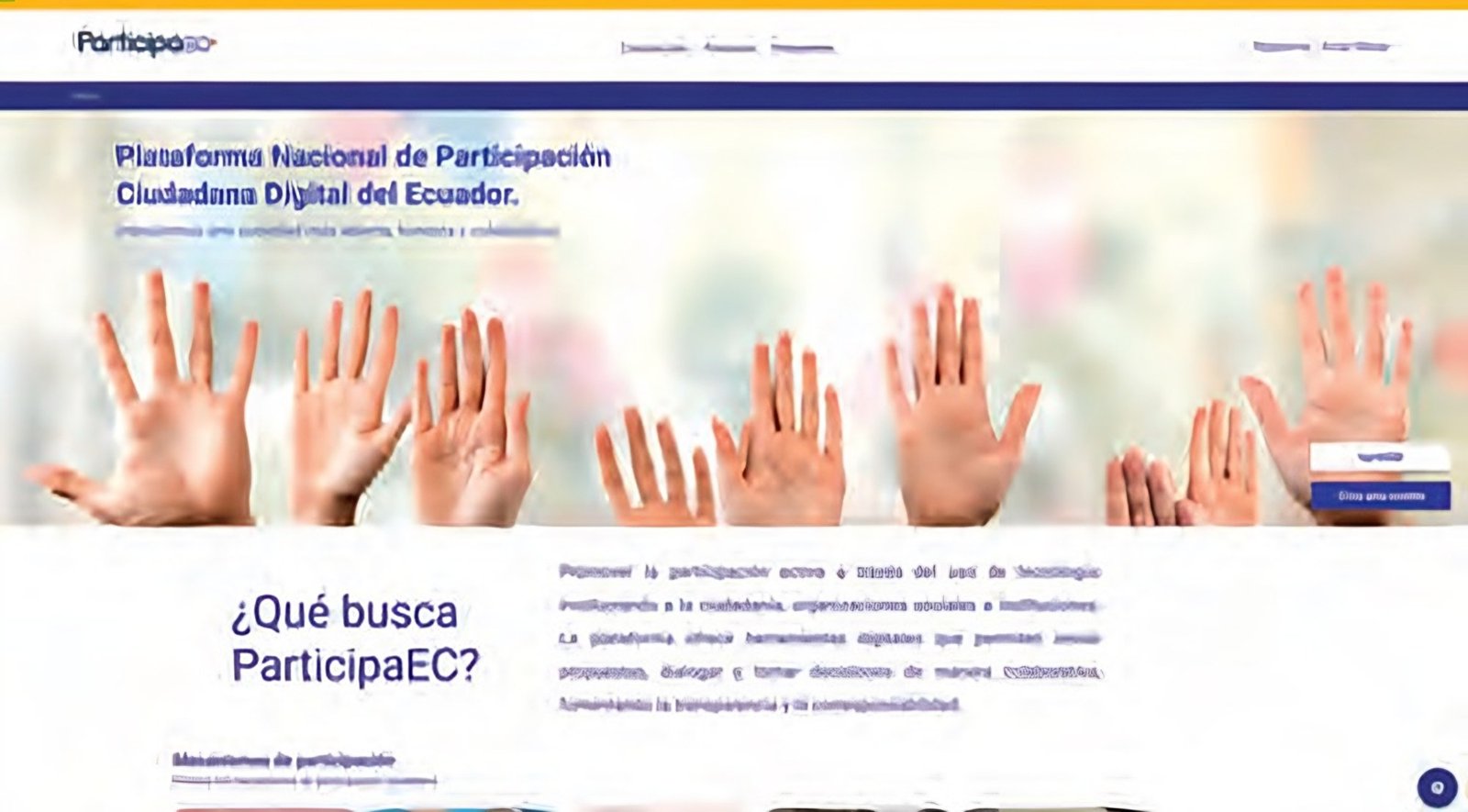
Digital transformation of Ecuador’s Social Registry

We redesigned citizen service and built an AI-powered system to register, track and evaluate, automatically, the socioeconomic data that guides how the State allocates its social programs.

ProcessesAI and DataLabsCreativity and Innovation
Case · 2025Social Registry
Client
GIZ · Social Registry Unit (URS)
Start
2025
Category
GovTech · AI operations
Duration
Estimated: 4 months · actual: 5 months (18 weeks)
Focus
AI · Data architecture · UX
10.9 Mrecords in the database
11technology improvements
19tracking statuses for citizens
80,000records a month with no manual processing

01 · The challenge

A huge registry and a hard form

The Social Registry database held 10.9 million records. Its 85-question web form was hard to use for people living in extreme poverty with limited digital access.

  • Manual ETL processes causing bottlenecks of up to 8 hours.
  • Extensive manual reviews.
  • No central orchestration of data processes.

One principle guided the project: information must be handled transparently and in plain language.

02 · The solution

Four pillars, eleven improvements

1 · Process automationLess manual review and a much simpler initial application.
2 · Citizen traceabilityA one-stop shop so every person knows where their application stands.
3 · Applied AIAssistants for the internal team and for citizens.
4 · Automated ETL pipelineData processes orchestrated end to end.

03 · The solution

Pillar 1: process automation

  • Automatic credential generation.
  • Automatic workload assignment.
  • An initial application with just three fields.
  • Notifications by email, WhatsApp and SMS.

04 · The solution

Pillar 2: citizen traceability (UX/UI)

We designed a Social One-Stop Shop with 19 tracking statuses, visibility based on each user’s role and proactive notifications, so citizens don’t have to ask where their application stands.

05 · The solution

Pillar 3: applied artificial intelligence

Internal bot with GraphRAGInternal queries over institutional knowledge, with Llama 7B and Neo4j.
Citizen chatbotAnswers frequent questions about the form.
Medical certificate analysisAssisted review with large language models (LLMs).

06 · The solution

Pillar 4: an automated ETL pipeline

Apache Airflow became the central orchestrator of data processes. We migrated the scripts to Python and integrated OpenStreetMap for geolocation.

This eliminated the manual processing of 80,000 records a month.

07 · The impact
What changed

BeforeAn 85-question web form to get started.
AfterA three-field initial application.
BeforeManual ETL processes with waits of up to 8 hours.
AfterA pipeline orchestrated with Apache Airflow.
BeforeManual review of applications and assignments.
AfterCredentials and workload assigned automatically.
BeforeCitizens with no visibility of their application.
After19 tracking statuses and alerts by email, WhatsApp and SMS.
Before80,000 records a month processed by hand.
AfterAutomated processing.

Facing a similar challenge?

Tell us what you want to achieve and we’ll build the solution together, from diagnosis to go-live.

Let’s talk
Next caseChildFund CAMEL dashboardDHIS2 and CommCare data unified into an analytics platform and a global Power BI dashboard.View the case
154local partners on three continents, in one dashboard

More case studies

See all case studies